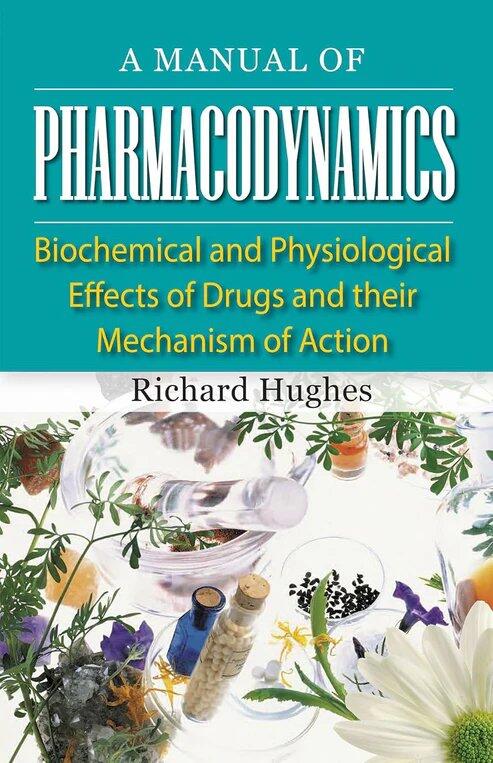
A Manual of Pharmacodynamics: Biochemical & Physiological Effects of Drugs & their Mechanism of Action
Couldn't load pickup availability

"A Manual of Pharmacodynamics" by Dr. Richard Hughes, particularly in its 6th edition, is a landmark work in homoeopathic literature, capturing the essence of Hughes' lectures delivered at the London School of Homeopathy. This book presents an in-depth study of homoeopathic remedies, offering a rich blend of history, pharmacological action, clinical usage, and Hahnemannian principles. Each remedy is thoroughly described, beginning with its plant, mineral, or chemical origin, historical background, and traditional or modern use (including misuse or overuse). Hughes provides a clear explanation of the remedy’s preparation, its mechanical, chemical, and dynamic actions on the human body, and its pharmacodynamics based on both classical and scientific approaches. The work delves deeply into the pathogenetic actions of substances through a compilation of poisoning cases, overdosing effects, animal experiments, and pure provings on healthy individuals, by homoeopathic tradition. A notable addition to this edition is a unique paper that traces Samuel Hahnemann’s evolving views on dosage from 1796 until his death, offering invaluable insight into homoeopathic posology. Written in a lecture style, the book maintains Hughes’ teaching voice and includes symptom profiles, clinical indications, remedy relationships, and therapeutic efficacy. Dr. Richard Hughes, a leading figure in British Homeopathy, is recognised for integrating pathological prescribing into homoeopathic practice and for aligning the discipline with contemporary medical science. This edition stands as a comprehensive, well-organised, and authoritative source of materia medica, making it a foundational text for both students and practitioners of Homeopathy.
WHAT YOU WILL FIND INSIDE:-
- Sources of Homoeopathic Materia Medica, derived from toxicological reports, clinical observations, and historical medicinal use, primarily based on pure provings on healthy individuals.
- Includes symptoms from overdoses, poisonings, and experimental research
- General Principles of Drug Action: dynamic action, mechanical, chemical, and dynamic effects of substances.
- Homoeopathic Posology (Dosage) discusses potency selection, dosage frequency, and the minimum dose principle.
- Includes a detailed study of Hahnemann’s evolving dosage philosophy (1796–death).
- Alphabetical Description of Remedies from Abies Nigra to Zincum Metallicum.
- Each remedy includes: source (plant, mineral, animal), method of preparation, pharmacodynamics, proving details and names of provers and clinical uses and symptom profiles.
- Discussion of Hahnemann’s Dosage: Includes his shift from material doses to high potencies and the LM scale.

Dr Richard Hughes
Customer Reviews
Each remedy is explained as a lecture, Kent’s style, and is not a boring catalogue of symptoms, one of the major hurdles to overcome when reading provings. When studying or revising a remedy, Hughes’ writings should be part of it, no matter what else is added to it afterwards: it is the sometimes small seed that then gives rise to an expanded knowledge and understanding. This fact by itself warrants having that book on your shelves, and not just as a decoration.....Read More-https://www.homeopathy360.com/book-review-of-a-manual-of-pharmacodynamics-6th-edition/